Nigeria Fintech Regulation: Stablecoins and Digital Payments
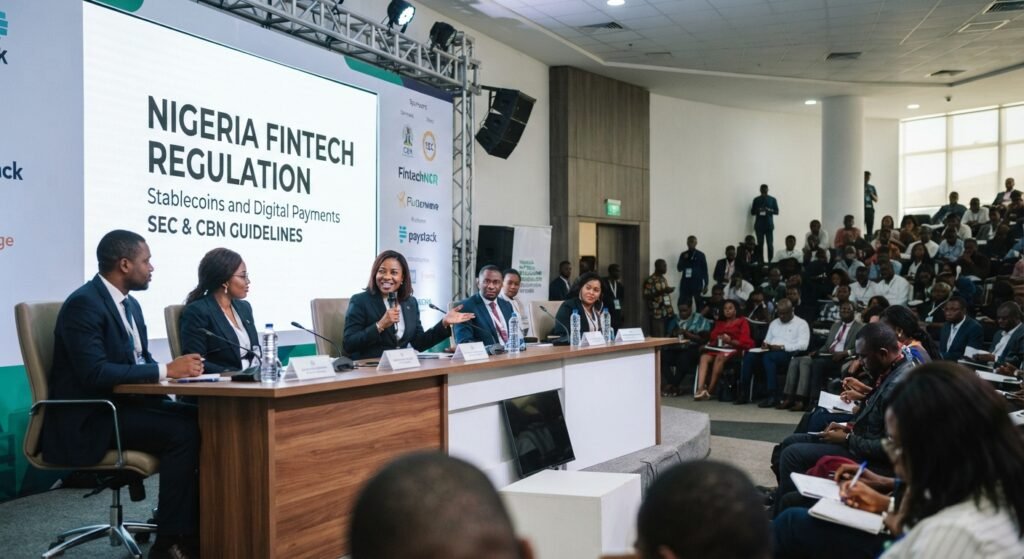
How Stablecoins, Payments and Digital Assets Are Reshaping Nigeria’s Financial System
Nigeria has become one of Africa’s most active markets for financial technology.
Across the country, fintech companies are changing how people send money, receive payments, manage accounts, and access financial services.
But another transformation is happening at the same time.
Digital assets are becoming increasingly connected to traditional financial infrastructure.
Stablecoins are being used for international payments.
Blockchain technology is being explored for settlement.
Digital identity systems are becoming more important.
And fintech platforms are increasingly operating across multiple areas of financial services.
This creates an important question:
Where does fintech innovation end and financial regulation begin?
That question is becoming increasingly relevant in Nigeria.
According to a report published by ITWeb Africa on September 28, 2026, Nigeria’s fintech boom is exposing regulatory gaps as digital assets, payments, identity systems, and embedded finance increasingly overlap.
Nigeria’s Fintech Industry Is Entering a New Phase
Nigeria has developed one of Africa’s most active fintech ecosystems.
Startups and financial technology companies have created new ways for consumers and businesses to access financial services.
But the financial ecosystem is no longer limited to traditional banking applications.
Modern fintech products can combine:
- Digital payments
- Cryptocurrency
- Stablecoins
- Cross-border transfers
- Digital identity
- Foreign exchange
- Embedded finance
- Blockchain settlement
The problem is that these activities may fall under different regulatory frameworks.
A company may therefore provide a product that touches several financial sectors at the same time.
This creates a challenge for regulators.
Stablecoins Are Creating a New Regulatory Question
One of the biggest issues involves stablecoins.
Stablecoins are digital assets designed to maintain a relatively stable value, often by being linked to currencies such as the U.S. dollar.
For businesses operating internationally, stablecoins can provide another way to move value across borders.
Companies can use digital dollars to:
- Pay overseas suppliers
- Receive international revenue
- Transfer business funds
- Manage cross-border settlements
But the regulatory classification of these transactions is not always straightforward.
ITWeb Africa reported that TransFi founder Raj Kamal identified stablecoin payments as one of the biggest regulatory gaps in Nigeria.
The issue exists because digital assets and payment activities can fall under different regulatory authorities.
SEC and CBN Operate Across Different Financial Areas
Nigeria’s regulatory structure involves several institutions.
The Securities and Exchange Commission oversees securities and digital asset activities within its mandate.
Meanwhile, the Central Bank of Nigeria is responsible for banking, payments, and foreign exchange matters.
This creates an interesting situation.
A transaction involving a stablecoin may simultaneously involve:
Digital assets.
Payments.
Foreign exchange.
Banking infrastructure.
Cross-border settlement.
When these activities overlap, businesses need clarity about which rules apply.
The challenge is therefore not necessarily the absence of regulation.
It is also about how different regulatory frameworks interact.
Compliance Costs Are Becoming Another Challenge
Regulation is important for protecting consumers and maintaining financial stability.
But compliance can also become expensive for fintech companies.
According to the ITWeb Africa report, a Central Bank of Nigeria survey published in February found that 87.5% of fintechs said compliance costs significantly affected their ability to innovate.
The same survey found that 37.5% said launching a new product could take more than one year.
For startups, long development and approval processes can create significant challenges.
A fintech company may need to:
- Understand multiple regulatory requirements
- Build compliance systems
- Verify customers
- Monitor transactions
- Protect customer data
- Manage reporting requirements
At the same time, the company must continue developing its technology.
Digital Identity Is Becoming Critical
Another issue emerging from Nigeria’s fintech expansion is identity fraud.
Financial platforms increasingly rely on digital identity verification.
Nigeria has strengthened systems involving:
- Bank Verification Numbers
- National Identification Numbers
- Customer verification
- Transaction monitoring
These systems can make fabricated identities more difficult to use.
But criminals can adapt.
According to financial crime and AI governance specialist Christian Jacob, criminals may increasingly use genuine identities to create or supply accounts.
This creates a new challenge.
The question is no longer simply:
“Is this identity real?”
It can become:
“Is this real person actually controlling this account?”
Artificial Intelligence Creates Another Layer of Risk
Artificial intelligence is also changing financial crime.
Modern fraud can involve increasingly sophisticated techniques.
This means fintech platforms may need stronger systems such as:
- Facial matching
- Liveness detection
- Behavioral monitoring
- Transaction analysis
- Automated fraud detection
But AI can also be used against security systems.
That means financial technology companies are entering an environment where both fraud detection and fraud itself are becoming more technologically sophisticated.
Nigeria Is Moving Toward Greater Regulatory Coordination
The growing overlap between financial technology and digital assets creates another question:
Can regulators coordinate efficiently?
ITWeb Africa reported calls for stronger coordination between financial regulators.
One proposal involves mutual recognition through the CBN’s proposed Single Regulatory Window, which could reduce duplicate submissions and compliance burdens for fintech companies.
The idea reflects a broader trend.
As financial services become interconnected, regulation may also need to become more interconnected.
The Future of Stablecoin Payments in Nigeria
Nigeria’s stablecoin market is developing alongside its broader fintech ecosystem.
Stablecoins can potentially support:
- International commerce
- Cross-border payments
- Export earnings
- Supplier payments
- Digital savings
- Remittances
But their development depends on regulatory clarity.
Businesses need to know:
- Who regulates the transaction?
- What licenses are required?
- How should transactions be reported?
- How should stablecoin payments interact with banking systems?
- What consumer protection rules apply?
Clear answers could help companies build products with greater certainty.
What This Means for Nigeria’s Crypto Economy
Nigeria’s crypto market is increasingly connected to the real economy.
Crypto is no longer discussed only in terms of trading and speculation.
The conversation now includes:
- Payments
- Remittances
- Stablecoins
- Business settlement
- Financial inclusion
- Digital identity
- Cross-border commerce
This means regulation will increasingly become part of the infrastructure supporting digital asset adoption.
The challenge will be finding a balance between innovation and oversight.
The Bigger Question for Nigeria
Nigeria’s fintech transformation is entering a period where technology and regulation are becoming increasingly interconnected.
The country’s financial ecosystem is developing quickly.
But the faster technology evolves, the more important regulatory coordination becomes.
Stablecoins are one example.
A transaction can move through digital asset infrastructure while ultimately serving a traditional business purpose such as paying a supplier.
That creates a financial environment where old categories may no longer describe modern transactions perfectly.
Nigeria’s next phase of fintech development may therefore depend not only on technological innovation.
It may also depend on how effectively regulators define the rules for a financial system where crypto, payments, banking, identity, and cross-border commerce increasingly intersect.
Source: ITWeb Africa, September 28, 2026
Nigeria’s fintech boom tests regulatory boundaries
Leave a Reply