Mexico Digital Economy Law Advances Digital Payments
September 25, 2026 · Plaza Cripto
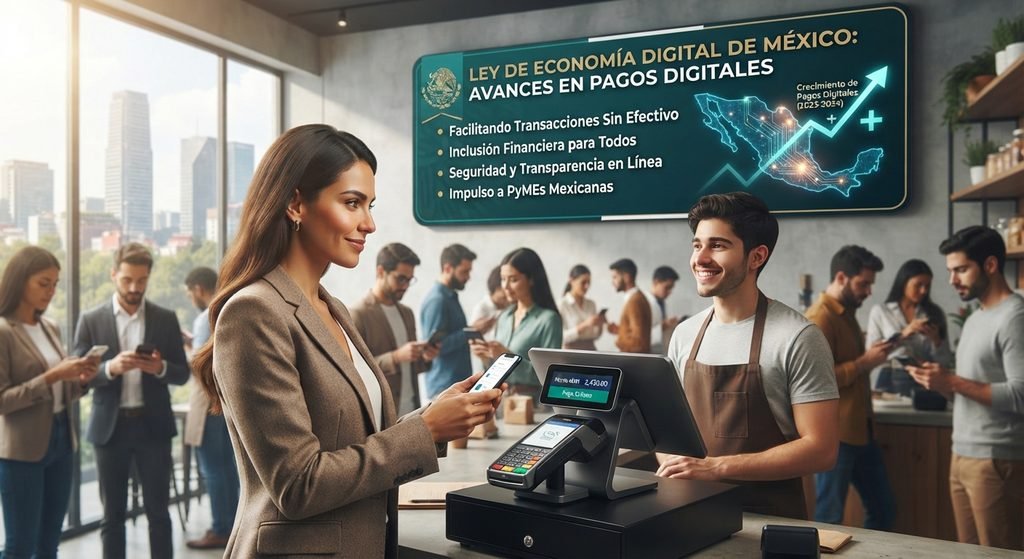
Mexico is advancing a proposed Digital Economy Law focused on digital and electronic payments, financial inclusion and remote access to financial services. The proposal is being reviewed by the Chamber of Deputies as part of the 2027 Economic Package and could contribute to the country’s broader transition toward a more digitally connected financial economy.
MEXICO — September 25, 2026
Mexico is moving forward with a proposed Ley de Economía Digital para Pagos Digitales y Electrónicos, a legislative initiative focused on expanding digital payment adoption across the country.
The proposal was discussed by the Comisión de Hacienda y Crédito Público de la Cámara de Diputados on September 24, with participation from government officials and representatives of the private and social sectors.
The initiative is part of Mexico’s broader 2027 Economic Package.
Unlike legislation specifically focused on cryptocurrency, the proposed law addresses digital and electronic payments more broadly.
Mexico’s Digital Economy Law Focuses on Payments
The proposed Digital Economy Law seeks to promote the adoption and implementation of electronic and digital payment methods.
According to the Chamber of Deputies, its objectives include expanding access to financial services and reducing barriers to financial inclusion.
The proposal would establish a broader legal framework for digital payments across Mexico.
It also seeks to facilitate the digital contracting of financial services.
Digital Payments Could Reduce Reliance on Cash
The initiative comes as Mexico works to increase the use of digital payment methods.
Government officials have described the transition toward electronic payments as a way to reduce reliance on cash while making financial transactions more accessible through digital channels.
The proposal also addresses the digital infrastructure needed to support wider payment adoption.
This includes responsibilities for businesses and government entities to enable digital payment methods where applicable.
Digital Economy Law and Financial Inclusion
Financial inclusion is another central component of the proposal.
The initiative seeks to reduce the gap between Mexico’s existing digital infrastructure and the extent to which people use digital tools for financial transactions.
During discussions in the Chamber of Deputies, officials highlighted the importance of expanding access to digital financial services.
The objective is not simply to introduce new technology.
It is also to make digital financial services more accessible to people and businesses.
Digital Identification and Financial Services
The proposed legislation includes provisions related to digital contracting of financial services.
According to the legislative tracking information, the proposal would recognise CURP Digital as a mechanism that could be used for trust and identification in digital financial-service contracting.
This could help facilitate remote financial interactions.
Digital identification can reduce the need for physical processes while allowing financial services to be accessed electronically.
Businesses Could Face New Digital Payment Requirements
The proposed framework also addresses digital payment infrastructure for businesses and government institutions.
According to the legislative proposal, providers of goods and services and government authorities would need to enable the necessary infrastructure for digital and electronic payments and promote their use.
The proposal also includes provisions for situations in which technical problems prevent digital payment acceptance.
In those circumstances, cash or cheque payments could remain available as alternatives.
Digital Payments and the Crypto Ecosystem
Although the Digital Economy Law is not a cryptocurrency law, its development is relevant to Mexico’s wider digital finance environment.
Crypto and blockchain systems operate within a financial ecosystem that increasingly includes digital wallets, electronic payments, online financial services and international transactions.
The expansion of digital payment infrastructure can therefore provide important context for understanding how consumers and businesses interact with digital financial tools.
However, digital payments and cryptocurrencies remain distinct areas with different regulatory frameworks.
Mexico’s Crypto Market Is Also Growing
The discussion around digital payments comes at a time when Mexico’s crypto economy is expanding.
Chainalysis reported that Mexico recorded US$77.6 billion in crypto activity between July 2025 and June 2026, representing a 25.5% increase from the previous period.
More than US$47 billion of that activity was associated with stablecoins.
This creates an increasingly relevant connection between Mexico’s digital-payment transformation and the broader digital asset ecosystem.
Stablecoins and Digital Payments
Stablecoins provide one example of how digital assets can intersect with payment infrastructure.
In Mexico, stablecoins represented approximately 61% of crypto flows during the latest Chainalysis reporting period.
Cross-border stablecoin activity has also become significant.
Chainalysis data showed monthly cross-border stablecoin flows involving Mexico reached approximately US$1.8 billion in June 2026.
These figures demonstrate that digital assets are already part of Mexico’s wider digital financial landscape.
International Payments Continue to Matter
Mexico’s economy has extensive international connections.
Businesses may work with foreign customers, suppliers and service providers.
Freelancers and remote professionals may also receive payments from clients abroad.
In this environment, access to international currencies and efficient payment infrastructure can become increasingly important.
Kolan provides access to USD, GBP and EUR accounts designed for international payment use cases.
This type of infrastructure can complement the wider development of digital financial services.
Security Is Essential in a Digital Economy
As more financial activity moves online, security becomes an important consideration.
Digital payments require secure authentication and account protection.
Cryptocurrency users face additional considerations involving private keys and self-custody.
OneKey provides hardware wallets designed to help users maintain control over their cryptocurrency private keys.
The growth of digital finance therefore makes security infrastructure relevant across both conventional digital payments and blockchain-based assets.
MyPal and Digital Financial Services
The development of digital payment infrastructure also creates opportunities for Web3 and digital finance platforms.
MyPal operates within the broader digital payment ecosystem and explores applications involving digital assets.
As consumers become more familiar with digital financial services, platforms connecting payments, Web3 and everyday transactions may become increasingly relevant.
What Happens Next With Mexico’s Digital Economy Law?
The proposed Digital Economy Law remains part of Mexico’s legislative process.
The initiative was presented by the federal executive on September 9, 2026, and remains pending in the relevant congressional committees.
The September 24 discussion represents another stage in the examination of the proposal.
Further legislative discussions will determine how the framework develops and what provisions ultimately become law.
Mexico’s Digital Financial Transition
Mexico is simultaneously experiencing growth in crypto activity and developing broader digital-payment infrastructure.
The two developments should not be treated as identical.
The proposed Digital Economy Law focuses on digital and electronic payments.
Crypto adoption includes blockchain-based assets, stablecoins, peer-to-peer transfers and cross-border digital asset activity.
However, both developments illustrate the increasing importance of digital infrastructure within Mexico’s financial economy.
Building a More Connected Digital Economy
The proposed Digital Economy Law highlights Mexico’s efforts to expand digital payment adoption and financial access.
At the same time, the country’s growing crypto activity demonstrates increasing demand for digital methods of transferring and managing value.
For consumers and businesses, this evolving environment brings together several areas:
- Digital payments
- International finance
- Stablecoins
- Blockchain infrastructure
- Digital asset security
- Financial inclusion
The next stage of Mexico’s digital economy will depend on how these different systems develop alongside regulation, infrastructure and user adoption.
Explore the Digital Financial Ecosystem
For crypto users, freelancers, remote professionals, entrepreneurs, e-commerce sellers and international businesses in Mexico, the expansion of digital finance creates new ways to manage payments and financial activity.
👉 Open Your Account: https://forms.gle/QVri289ukKMFR6Qn8
🔐 Buy OneKey and Get Up to 5 USDT Cashback: https://onekey.so/r/ERC
💳 Discover MyPal: https://h5.mypal.pro/pm/vhcn?code=27090432
About Kolan, OneKey and MyPal
Kolan provides solutions designed to support international payments and access to USD, GBP and EUR accounts.
OneKey develops hardware wallets and digital asset security solutions designed for cryptocurrency self-custody.
MyPal operates within the digital payments and Web3 ecosystem, supporting emerging applications of digital finance.
Together, these solutions represent different components of the evolving digital financial ecosystem connecting payments, international finance, blockchain and digital asset security.
SEO keyphrase: Mexico Digital Economy Law
SEO title: Mexico Digital Economy Law Advances Digital Payments
Slug: mexico-digital-economy-law-digital-payments
Meta description: Mexico Digital Economy Law advances digital payments, financial inclusion and electronic transactions as Congress reviews the proposal.
Suggested image: Mexico Congress with digital payment and blockchain graphics.
Image alt text: Mexico Digital Economy Law advances digital and electronic payments
Leave a Reply